
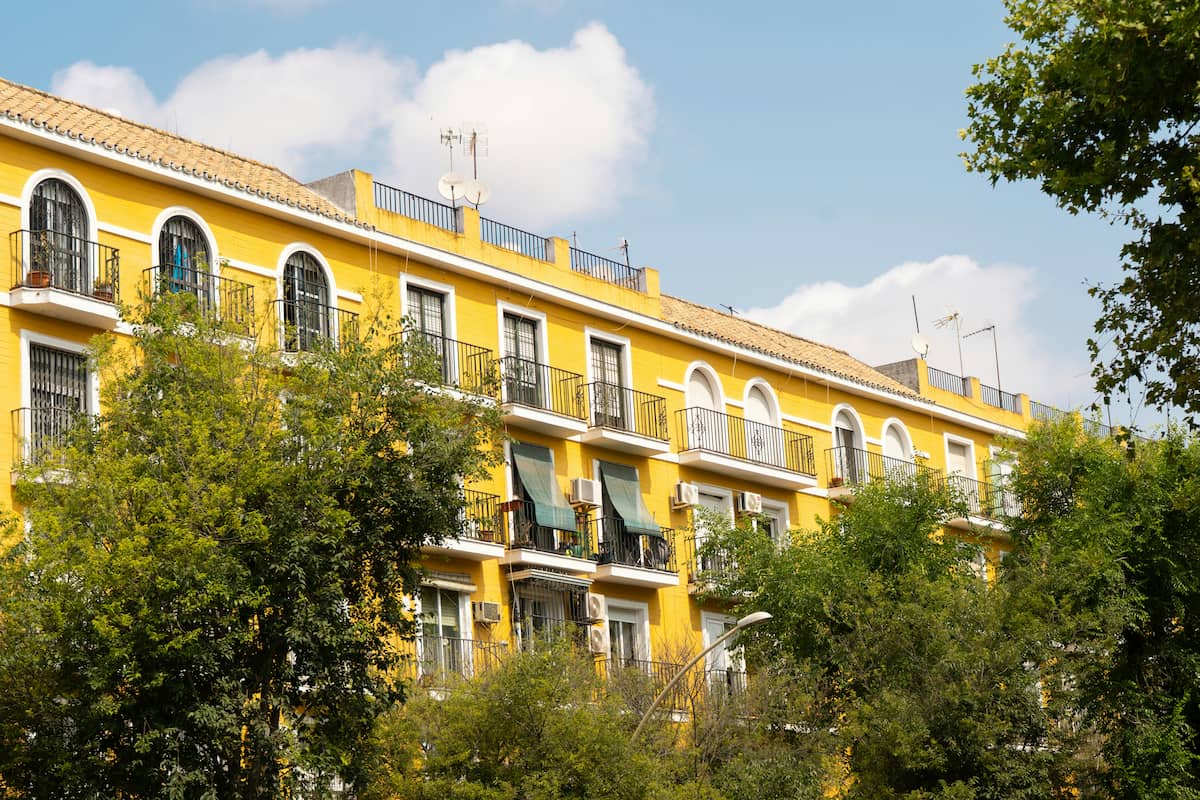
Having lived in roughly ten different apartments during my time here, I can confidently say I know all about renting in Seville. I’ve also made plenty of mistakes along the way but I learned so many valuable lessons in the process. This guide covers those learnings and includes the current up-to-date numbers so that you know exactly what to expect when renting in Seville. Updated April 2026.
How the Seville Rental Market Has Changed
The most obvious change is the rise in prices, particularly for apartments in the centre. Global inflation has been on the up in recent years and Seville hasn’t been immune to that as rents have risen while salaries lag behind. There’s also more competition for good quality apartments. If you’re interested in living in Seville, an apartment in the centre of at least 60m² can today cost anywhere between €700 and €2,000. Competitive periods for finding rentals in Seville are usually September to October and January to February as students and expats arrive ahead of the new year.
If you find something during these periods make sure you act quickly. If you’re sold on an apartment, tell the owner or estate agent you’re ready to pay the deposit that same day. If you don’t you run the risk of somebody else doing that during another viewing and missing out completely.
What Landlords in Seville Typically Require from Expats
I’ve personally dealt with a variety of landlords and some are stricter than others when it comes to the documents they require. Some also use inmobiliarias (real estate companies) and you’ll have to do everything by the book with one of these.
Standard requirements:
- NIE number — always required as your passport alone is usually insufficient for a long-term rental. If you have a TIE card this is even better as it signals established residency (read our NIE number Seville guide here if you haven’t got yours yet)
- Passport or national ID — photocopy required alongside your NIE
- Proof of income — typically the last three nominas (payslips). Landlords want to see that your monthly income covers at least double the monthly rent. A €900/month apartment means they want to see at least €1,800/month coming in
- Employment contract — some landlords ask for this alongside or instead of payslips, particularly if you’ve recently started a new job
- References from previous landlords — not always required but helpful if the landlord isn’t convinced by you
- Deposit — typically one to two months rent paid upfront before you get the keys
The expat-specific challenge: Most landlords in Seville prefer tenants with nominas from a Spanish company. Employment contracts not registered with a Spanish entity make them uncomfortable. If you’re working for a foreign company or you’re autonomo here, don’t be surprised if you’re turned down by the owner. This applies equally to retirees and Non-Lucrative Visa holders who can’t provide conventional payslips.
Fortunately though there is one solution that can convince them even when all hope seems lost.
The Aval Bancario — If You Can’t Provide Nominas
I know from personal experience how difficult renting in Seville can be when you’re autonomo. No matter how presentable or likable you are, the moment you reveal you’re self employed is when their interest in you will start to wane—and then disappear completely. I’ve been rejected from multiple apartments for being autonomo and no amount of persuasion ever seemed to work.
However, about five years ago I found an apartment that I loved and I was determined to make it mine. After informing the estate agent that I was autonomo I knew it would be difficult. Fortunately for me, we got along well and he did his best to convince the landlord on my behalf. That’s when they presented me with a solution they were convinced I wasn’t going to like: the aval bancario.
As I couldn’t provide a guarantor, this was the only remaining way for the landlord and myself to reach an agreement. The only way I could get the keys was by putting up six months rent in advance plus the deposit and inmobiliaria fees. They were asking me to part ways with about €6,500 in total. That meant digging deep into my savings to cover it. That will hurt for most people but given my past frustrations renting in Seville as autonomo, I was just relieved there was finally a solution in front of me.
What is an aval bancario and how does it work?
An aval bancario is a bank guarantee. It’s a protected sum of money deposited with your bank that the landlord can access if you ever default on your rent or cause damage. It’s a common alternative to an aval personal (guarantor) and it’s worth understanding in case you ever need a way to secure a rental property here. Raise it to the landlord if you’re ever having difficulty renting in Seville. Read our guide on setting up a bank account in Seville here if you haven’t already.
What an aval bancario isn’t: Unfortunately it is not used to pay off the first three or six months of rent. This money is usually tied up in the property for a year during your tenancy and you’ll have to start paying rent straight away even after this is paid (I was initially unaware of this). In my case, I got the money back exactly one year into my tenancy.
My advice: If you find a place you love and an aval bancario is your last solution, pay it. A year goes by pretty quick here and you’ll have that money back in no time plus the apartment you wanted. Just make sure the retainer period is a maximum of one year in the contract—some landlords might push for longer but a year is usually fine.
Pay yourself a nómina if you own an SL
Another way around this is by owning a Sociedad Limitada in Spain. With an SL you can actually pay yourself a nómina, something many expats are unaware of. Read our guide on autónomo vs SL in Spain for more information here.
Typical Costs Renting in Seville in 2026
The Seville rental market has risen substantially in recent years. The following figures reflect the current market for long-term residential lets (not short-term or tourist rentals).
Approximate monthly rents by property size:
| Property type | City centre | Outside centre |
|---|---|---|
| Studio / 1-bed apartment | €700 to €2,000/month | €500 to €1,500/month |
| 2-bed apartment | €900 to €2,800/month | €650 to €2,000/month |
| 3-bed apartment | €1000 to €3,600/month | €750 to €3,300/month |
| Unfurnished 65sqm+ (centre) | €750 to €2,500/month | €550 to €2,000/month |
Additional monthly costs to budget for:
- Utilities (electricity, water, gas, internet): €75 to €150/month for a standard apartment. Budget significantly more for electricity in summer as from June onwards your air conditioning will be on all day. €100 to €150 extra per month from June to September is realistic.
- Community fees (comunidad): €30 to €100/month depending on the building and its facilities — lifts, pool, concierge etc. Though this is often included in the price.
Rent is the biggest single cost for most expats in Spain and our full cost of living in Seville guide puts rent in context alongside utilities, food, transport, and everything else you will actually spend each month.
One practical note on gas: Newcomers renting in Seville may be surprised to know that some older apartments here still use bombonas de gas (portable gas cylinders) instead of central heating—avoid apartments that still use them. They’re annoying to replace and once your existing cylinder runs out of gas you’ll be having cold showers until you can replace it.
Furnished vs Unfurnished
You can rent both furnished and unfurnished apartments in Seville but the right choice depends on how long you plan to stay for and how thoroughly you’ve checked the apartment beforehand.
Furnished apartments:
- Ready to move into and no upfront cost for furniture
- Typically €100 to €200/month more expensive than the equivalent unfurnished
- Rental contracts may include an inventory that you sign on arrival and are held to on departure. Check this carefully as scratches on furniture or missing items can be used to justify withholding your deposit
- Better for short to medium stays (one to two years) where buying furniture is not economical
Unfurnished apartments:
- Typically cheaper monthly
- You buy and keep your own furniture — nice if you’re staying long-term
- More negotiating power with landlords as you’re signalling a longer-term commitment
My advice: Renting an unfurnished apartment can be attractive especially if it’s €100 or €200 cheaper than similar sized alternatives. However, you need to bear in mind that sofas, tables, desks, and bed frames are all going to be a nightmare to move should you decide to leave after only a few months. So make sure you’re 100% happy with the apartment beforehand.
I made this mistake when I rented a central apartment here for €500 unfurnished. The apartment itself wasn’t the nicest inside but I thought I was being financially savvy and convinced myself it would look better with new furniture inside. Many apartments in the centre have vicios ocultos (hidden problems) that won’t be pointed out to you during visits. Check that the windows are double glazed (you won’t sleep with single glazed ones), how thin the walls are, if it has central heating and so on before signing anything. I didn’t do any of this and ended up with an apartment riddled with problems.
The lesson: When it comes to renting in Seville, always pay for what you can afford. You’ll feel that difference in quality every day and you’ll thank yourself for it. The flip side of that is feeling miserable somewhere else for the sake of €100 euros or so.
Where to Find Rentals in Seville
Idealista is the dominant property website in Spain and your primary tool for renting in Seville. New listings go fast so set up alerts for your target neighbourhood and budget.
Fotocasa is the second most common website and worth checking as some landlords will list exclusively there.
Facebook groups are genuinely useful for finding rentals in Seville, particularly Expats in Seville and similar groups where landlords post directly and where other expats share listings or flag available apartments. This is where you sometimes find deals that never make it to Idealista.
Local estate agents (inmobiliarias) like Housin are worth visiting in person, particularly if you are new to the city and want someone to guide you through the process. They typically charge one month’s rent as a commission fee so factor this into your upfront budget. Some landlords list exclusively through agents so they’re not a channel you should skip.
Word of mouth and the expat community remains the best source for good apartments in Seville. Properties in desirable locations often never reach Idealista because the landlord tells their current tenant who tells a friend. Getting embedded in the expat community such as Facebook groups and local meetups puts you in a much better position.
Airbnb during the search period: if you’re arriving in Seville without a permanent address and need time to look around, an Airbnb for two to four weeks gives you a base while you view other properties. It also gives you the time to look properly rather than feeling pressured into signing something quickly. The pressure of having nowhere to go is responsible for a lot of bad rental decisions.
The Best Neighbourhoods for Expats in Seville
This is of course completely subjective and will depend on each person’s personal preference but given I’ve lived across the city I thought I’d also give my thoughts on the neighborhoods I’m familiar with.
El Arenal: After ten years in Seville, this is still one of my favourite neighbourhoods in the city. It’s probably the most central in Seville with travel connections everywhere. You’ve got bus stops, taxis, and the Puerta de Jerez metro station only five or ten minutes away. You can also walk to most places from here in about 20 minutes. Renting in El Arenal puts you in the heart of Seville’s historic centre and you’ll have some of the most beautiful landmarks right on your doorstep. Of course, the downside is that the area can get pretty busy with both locals and tourists.
La Macarena: One of the most diverse barrios in Seville, La Macarena is another favourite thanks to its friendly ambience and cheap food and drink. There’s always good vibes here and thanks to its large South American population you’ll find some of the best Colombian, Venezuelan, and Argentinian restaurants here. As it’s generally cheaper than other neighbourhoods some people may not feel as safe on their own here at night. It’s generally fine though and police presence is also good.
Las Setas (La Encarnación): I’ve found that despite the many tourists here, La Encarnación regularly has flats available to rent. And while you’ll have bars and restaurants on every corner, it is worth bearing in mind that touristic areas like this can be difficult to live in—getting home during tourist season here was never very fun. I also found supermarkets to be very limited in this area
Triana: Historically Triana was never regarded as a part of Seville until the Puente de Isabel II was built to connect it with the rest of the city. Even today you’ll still find a sense of rivalry between the locals here and in Seville. Renting in Triana is a good option if you want a truly authentic experience in Seville as it boasts a reputation as one of the best places in the country for flamenco and ceramics. In the evenings the vibrant Calle Betis is where you’ll find yourself enjoying a beer as the sun sets over the Guadalquivir river.
Nervión: Seville’s commercial and business district, Nervión is home to many larger apartment blocks and excellent transport links including both the metro station and Santa Justa train station nearby. While there’s arguably more things to do closer to the centre, you might find you have better quality apartments here for the same price than in El Casco Antiguo (Old Town). It’s a trade off you’d have to think seriously about but if you’re a cinephile you’ll enjoy being closer to the modern cinema complex in Nervión Plaza. And if you prefer football, Seville’s Ramon Sanchez-Pizjuan Stadium is right here in Nervión too.
Santa Cruz: Arguably Seville’s most beautiful neighbourhood, Santa Cruz is home to gorgeous architecture and charming winding streets. However, if you’re renting in Seville long-term I wouldn’t recommend it; Santa Cruz is a hotspot for tourists and restaurants, bars, and shop prices here are higher than anywhere else in the city. Fine for a week or two but avoid for longer periods.
Los Remedios: Famous for hosting the annual Feria celebration, Los Remedios sits just south of Triana on the west bank of the Guadalquivir. It’s very similar to Nervión in my opinion as it offers better value for money for renting in Seville if you don’t mind being further from the action. Although it is generally quieter with fewer tourists, which might be a better option if you’re moving with children and need more space.
The Rental Contract — What to Check Before Signing
Spanish rental contracts are in Spanish. If your Spanish is limited, get a bilingual friend or a gestoría to look over it before you sign.
The main things to check:
Contract type: The standard long-term residential rental in Spain is governed by the Ley de Arrendamientos Urbanos (LAU). Under current law, the minimum duration for residential contracts is five years for individual landlords and seven years for corporate landlords. The landlord cannot evict you or refuse renewal within that period without a valid legal reason.
Be aware that some landlords try to offer shorter contracts—eleven months for example—framed as “temporary contracts.” These are sometimes used to bypass tenant protections. A contract described as a contrato de temporada (seasonal contract) rather than a contrato de vivienda habitual (primary residence contract) carries fewer protections. If you intend to live somewhere long-term, insist on a vivienda habitual contract.
Key things to check:
- Monthly rent amount and payment date
- Which utilities are included, if any
- Who pays the comunidad fees — landlord or tenant
- What the deposit covers and the conditions for its return
- The notice period required to terminate — typically 30 days from tenant, 4 months from landlord after the initial period
- Any clause about annual rent increases
- The inventory if the apartment is furnished
Need someone you can trust?
Skip the searching. Tell me what you need and I’ll find the right person for you.
Your Rights as a Tenant — Spain’s Rental Law
This is something many expats in Seville don’t know, and some landlords rely on that ignorance.
Annual rent increases are capped. Under Spain’s Ley de Vivienda (Housing Law), annual rent increases for residential contracts are currently capped at 2% regardless of what the rental contract says. Even if your contract includes a clause allowing the landlord to increase rent by more than this—linked to inflation (IPC) or any other metric—that clause is overridden by national law. The cap applies at the point of renewal each year.
If your landlord attempts to increase your rent above 2%, you do not have to accept it. Your gestoría can write a formal letter if needed. This is why I recommend you find a gestoría with a broader understanding of bureaucracy in Spain so that they can protect you from being exploited.
The landlord also can’t enter your apartment without notice. You have the right to refuse them entry unless there’s a genuine emergency.
Regarding deposits, the landlord must return yours within 30 days of the end of the contract. If they fail to do so without valid cause, you’re entitled to interest on the amount every day beyond those 30 days. Talk to your gestoría about this if you need to enforce it.
Repairs are the landlord’s responsibility. Structural and maintenance issues like leaks, broken boilers, and electrical faults are all the landlord’s problem to fix, never yours. Document any issues in writing and keep records should you later need them.
Deposits — The Honest Reality
By law, a deposit of one month’s rent is the minimum required for residential rentals although you may have to pay two months for furnished apartments. The landlord is then required to lodge the deposit with the Junta de Andalucía for the duration of your tenancy. This money can’t be used by them until your contract is up and they have 30 days to return your deposit unless they’re able to provide a detailed breakdown of the deductions.
Normal wear and tear such as light scuffs on floors and walls can’t be deducted from your deposit but most landlords will still dispute it.
Practical steps to protect yourself:
- Photograph every room thoroughly on the day you move in
- Send the photos to the landlord by email on move-in day — this creates a timestamped record
- If there is an inventory, go through it item by item and note any existing damage in writing before signing
- Keep all written communication with your landlord throughout the tenancy (backup whatsapp messages etc)
Practical Things to Check Before You Commit
For me renting in Seville has been quite the rollercoaster. I’ve had both good and bad experiences but I have at least learned some valuable lessons. Keep the following checklist in mind before committing to anything as they’ll make a difference to your quality of life here.
Windows and insulation: Good windows are particularly important if you plan to live in the centre of Seville. Double glazed and properly sealed windows will significantly reduce street noise and keep your apartment warmer in winter when temperatures drop at night. Single-pane and poorly fitted windows means roasting in summer and freezing in winter—and it’s very noisy too.
Heating system: Always go for centrally heated apartments and avoid any with bombonas de gas (portable gas cylinders). They’re a nightmare to replace and usually less cost-effective than central heating. Ask the owner or estate agent which the apartment has before viewing.
Ground floor apartments (bajos): My own experience with bajos hasn’t been good here. While they are generally cheaper, they also come with many trade-offs you should be aware of. They have less natural light, less privacy, more street noise if street-facing, and cockroaches in the summer. The heat draws them towards the ground level and bajos can quickly become infested with them. This is worth knowing before signing anything.
Air conditioning units: While most apartments will have at least one air conditioning unit, there are others without them. Summers in Seville are difficult to get through, particularly at night when you’re trying to sleep. A fan might seem like a good solution until you realize they’re only pushing hot air around the room. Look for places with at least one or two air conditioners when renting in Seville.
The first inspection: Walk around slowly. Open every door, cupboard, and window. Look at the ceilings and walls for damp patches and check under the sink. Turn taps on, flush the toilet, and ask about the water pressure. The vicios ocultos (hidden defects) are easy to miss so take your time when viewing the property and book a second viewing if you need to.
Utility contracts: In most Seville rentals, utilities remain in the landlord’s name and you pay them directly. If you plan to stay long-term, ask the landlord to put them in your name so you can pay them instead. This is a good idea if you’re autonomo in Seville or own an SL as you can include these costs as business expenses.
Frequently Asked Questions About Renting in Seville
How much does it cost to rent in Seville as an expat? A one-bedroom apartment near the centre currently costs between €700 and €2,000 per month. Outside the centre expect to pay between €500 to €1,500. Budget additionally for utilities (€75 to €150/month), electricity in summer (significantly more), and comunidad fees (€30 to €100/month).
Do I need a NIE to rent an apartment in Seville? Yes, most landlords and agencies require a NIE as part of the documentation. A passport alone is generally not sufficient for a long-term rental. See our NIE guide for the full process.
What is an aval bancario and do I need one? An aval bancario is a bank guarantee—a sum deposited with your bank that the landlord can access if you default. It’s commonly required from expats who can’t provide Spanish nominas (payslips) like self-employed and remote workers. Typically it’s three to six months rent deposited as the aval, plus the standard deposit on top with estate agent fees (if applicable).
How much deposit will I need to pay in Seville? The legal minimum is one month’s rent for unfurnished apartments and sometimes two months for furnished. In practice many Seville landlords ask for one month. Budget for this on top of any additional requirements like an aval bancario.
Can a landlord increase my rent by more than the contract says? No. Under Spain’s current housing law, annual rent increases are capped at 2% regardless of what the contract says. If your landlord attempts a higher increase, you do not have to accept it and should inform them of this current cap.
What is the minimum rental contract length in Spain? For a standard residential rental (contrato de vivienda habitual), you have the right to stay for five years if your landlord is an individual, or seven years if your landlord is a company. The landlord cannot end the contract within these periods without legal cause.
Will I get my deposit back? Legally, yes — the landlord must return it within 30 days of the end of the contract, minus any legitimate deductions for damage beyond normal wear and tear. In practice, deposit disputes are common in Seville, particularly in furnished apartments where furniture condition provides easy justification for deductions. Photograph everything on move-in day.
What is the best time of year to look for a rental in Seville? Avoid September to October and January to February if possible as these are the most competitive periods when students arrive and expats relocate. Spring (March to May) and early summer tend to have better availability and less competition.
Should I use an estate agent to find a rental in Seville? An agent can be helpful if you are new to the city and want guidance, but they typically charge one month’s rent as commission. Many of the best properties are found through Idealista, Facebook groups, or direct word of mouth, which cost nothing. Try those first before committing to an agent and remember that estate agents will always put the landlord’s interests before the tenant’s.
Can I rent in Seville without speaking Spanish? You can find and view properties without Spanish but you may need help with the contract which will be written in Spanish. Further negotiations will also be in Spanish. A bilingual friend, your gestoría, or a property professional from our Property page can help with the contract review and negotiations on your behalf.
Summary and Final Advice
Renting in Seville is something you can do by yourself and any questions or disputes around the contract is where a property professional could add value. Sites like Idealista are all you need to see what’s available but bear in mind that you never pay anything before viewing a property in person. Fraudulent listings that try to exploit expats unfamiliar with Spain are not uncommon. Autonomos and SL owners might also consider using a property lawyer when navigating more complex situations like the aval bancario.
Browse Property Professionals in Seville →
Useful Resources
NIE number Seville — required before most landlords will sign a contract with you
Empadronamiento Seville — register your address once you have signed — needed for utilities, healthcare, and much more
Banking & Finance Seville — you will need a Spanish bank account for rent payments and setting up an aval bancario
Last updated: April 2026. Rental prices and legal requirements are subject to change. Always verify current requirements and seek professional advice before signing a rental contract.
